Case Study
SaaS Performance Marketing & Lead Generation for VanHack
A two-track growth engine for a global HR-tech platform cutting cost per lead by 50% while scaling both developer and employer acquisition.
Services: Paid Media · SEO · Content & Video · Conversion Rate Optimization · Lifecycle Email
The results
−50%+
cost per lead and cost per click, in 6 months, with no increase in ad spend.
+500%
B2B leads in 12 months (~100 new companies)
+300%
B2C leads in 12 months (36,000 new users)
Overview
- Industry: SaaS · HR tech · recruitment marketing
- Markets: North America · South America · Europe
Blindspot Agency ran full-service growth marketing for VanHack, a Toronto- and Vancouver-based HR-tech SaaS platform that connects global software developers with employers hiring for senior and niche technical roles. Over a multi-year engagement, Blindspot cut VanHack’s cost per lead by more than 50% and scaled two distinct acquisition funnels — developers (B2C) and employers (B2B) — through paid media, content, SEO, and lifecycle marketing.
The challenge: two audiences, one small team
VanHack’s internal marketing team was small and its business was moving fast. It needed a partner who could own growth end to end — and, harder still, sell to two completely different audiences at once.
On one side were developers (B2C): skilled engineers worldwide looking to land tech jobs abroad, who needed to be convinced to join the platform. On the other were employers (B2B): HR leaders, CTOs, and recruiters who needed to be convinced VanHack was the fastest path to niche technical hires. The two funnels wanted different messages, different creative, and different proof — but had to be run from one budget and one team.
The goals: make existing PPC and social spend more efficient, convert more of the existing traffic across free and premium plans, and scale both funnels in parallel.
How Blindspot built the B2C funnel (developers)
To grow the developer community, Blindspot led with content formats that build trust and intent rather than chasing raw clicks:
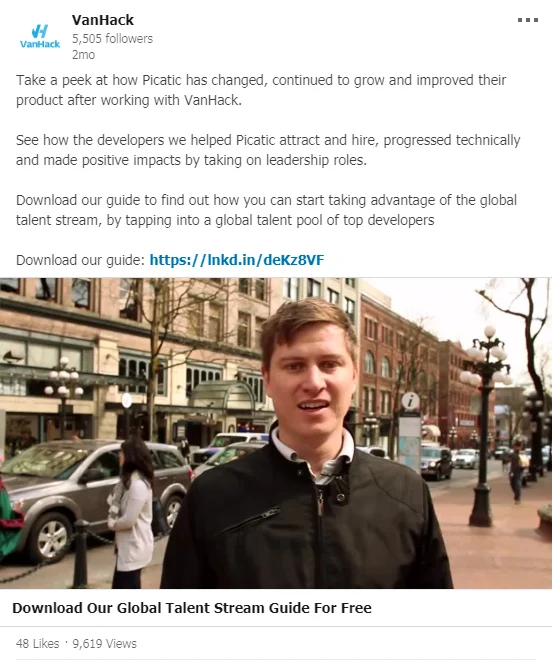
- Success-story content profiling “VanHackers” who had landed Canadian tech jobs — real outcomes as social proof
- Short-form video and image-led creative built specifically for paid-social performance
- How-to content that reduced friction and lifted conversion from existing free and premium traffic
- Top- and mid-funnel lead magnets that grew volume while pulling CPC and CPL down
The result was a funnel that got cheaper as it got bigger: a 300% increase in B2C leads over twelve months, adding 36,000 new users.

How Blindspot built the B2B funnel (employers)
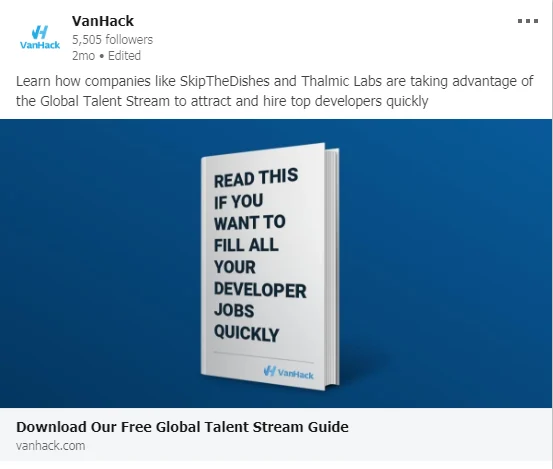
For employers, Blindspot positioned VanHack around what hiring teams actually care about — a large global talent pool, speed to hire, candidate quality, and, where applicable, an accelerated immigration pathway through Canada’s Global Talent Stream.
The engine combined:
- Landing-page testing across employer and talent-pool pages, with remarketing to re-engage high-intent visitors who didn’t convert
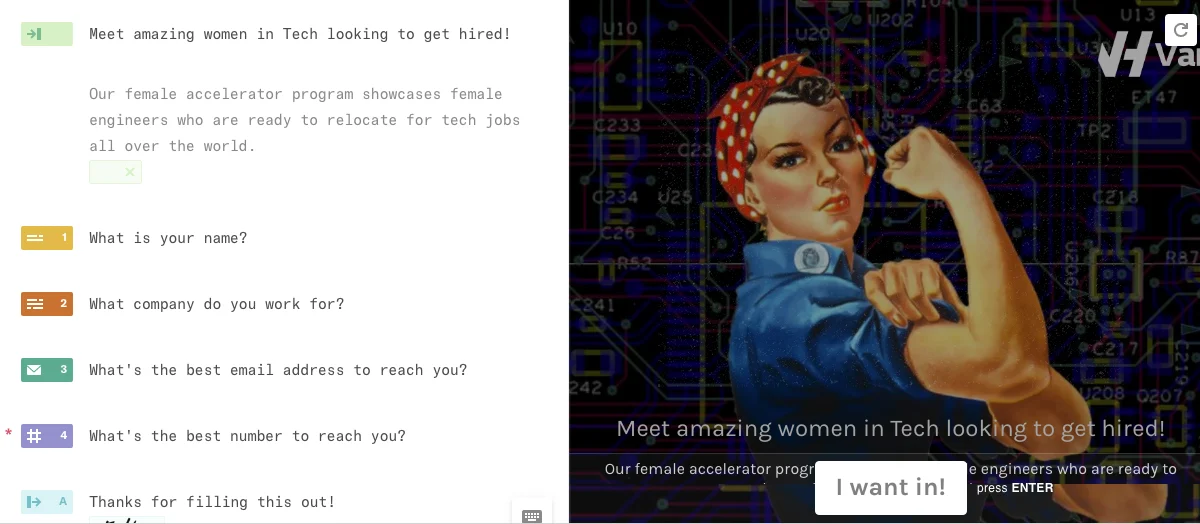
- Email drip campaigns that paired curated content and real candidate profiles with a clear call to book a sales meeting
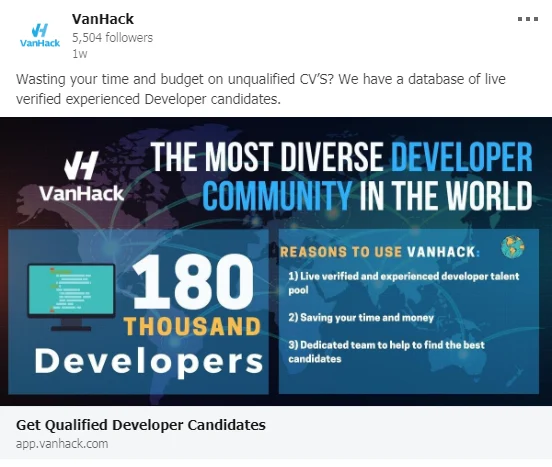
- Continuous ad testing across Google Search, LinkedIn, Facebook, and Instagram over a two-year period
B2B leads grew 500% in twelve months, generating roughly 100 new companies — including Fortune 500 enterprises and major technology brands.


The compounding layer: SEO, content, and video
Alongside paid acquisition, Blindspot built an owned-media engine that kept lowering blended acquisition cost over time:
- 40+ blog articles and 3 e-books (including The Ultimate Relocation Guide and Why the Global Talent Stream Solves Your Hiring Problems) as lead magnets and SEO assets
- 200% increase in blog traffic over 24 months, roughly 1,000 content-led backlinks, and a page-one ranking plus #1 image result for the target phrase “Global Talent Stream”
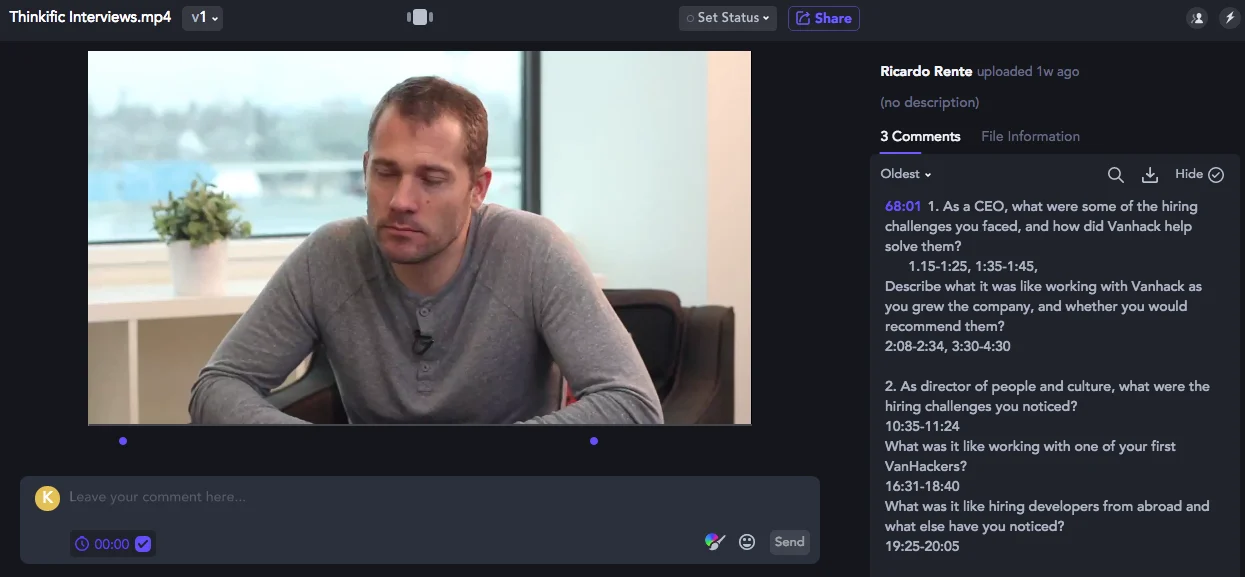
- Branded video, including a customer-story interview with Thinkific CEO Greg Smith (10,000+ YouTube views), plus data-driven creative variations feeding the paid-social tests
Why this approach worked
SaaS growth stalls when paid, content, and SEO are run as separate programs. Blindspot ran them as one system: paid ads drove efficient demand while content and SEO lowered the blended cost of that demand over time, and lifecycle email converted intent into booked meetings and signups. Running both funnels off shared creative and shared learnings is what let VanHack scale B2B and B2C at once — from 1,000 new users a month to 10,000, without the cost per lead climbing to match.